

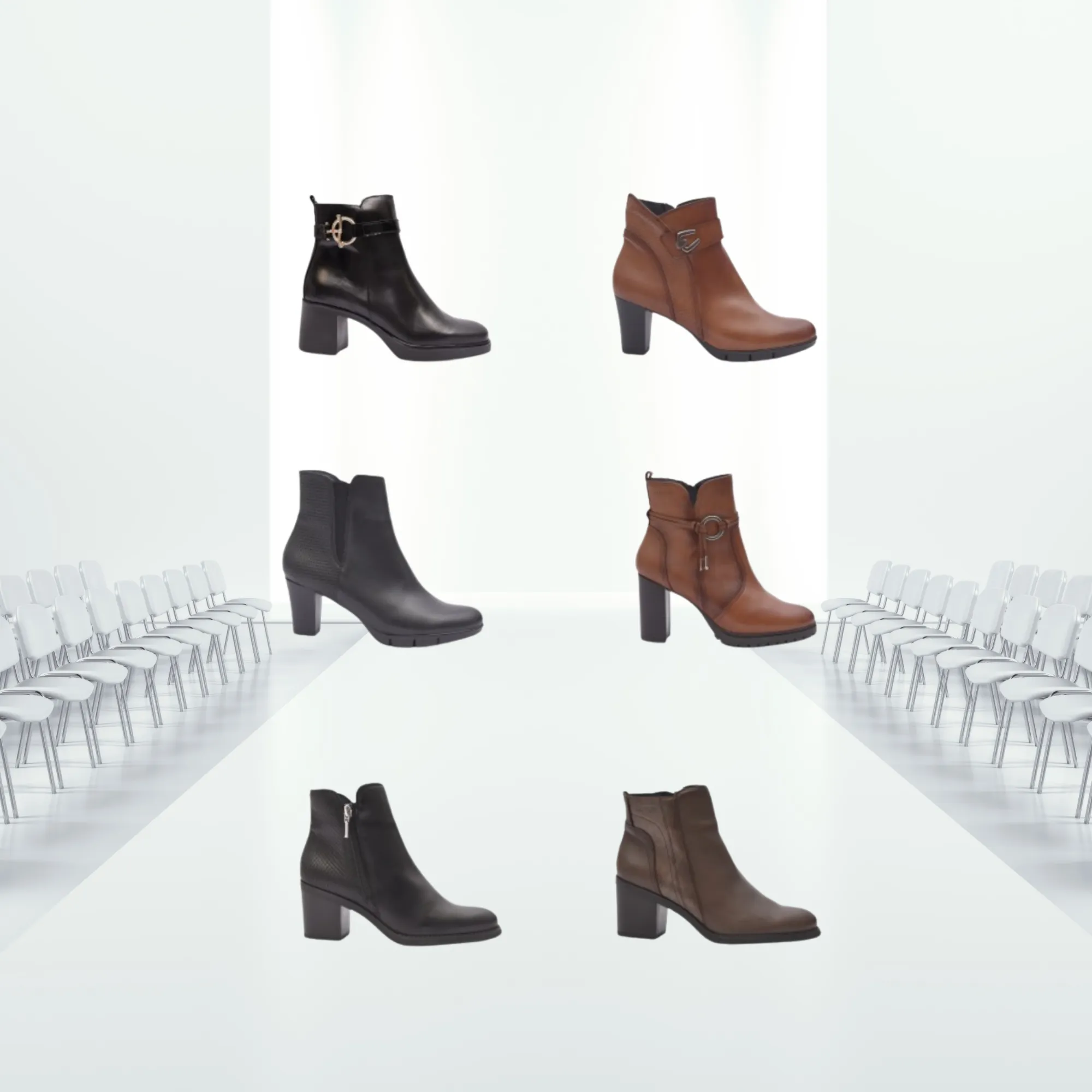
The ankle boot is probably the most versatile piece of footwear in the fall/winter wardrobe. It works with jeans, skirts, dresses, and tailored trousers. It goes from the office to the weekend. It handles October rain and still looks appropriate at a November dinner. And yet, choosing wrong — in terms of height, last, material, or sole type — can turn one of the potentially most comfortable styles into one of the most problematic.
This guide organizes the key variables to make your decision easier.
The Types of Ankle Boot and What Each One Is For
Flat or low-heel ankle boot (up to 1 in / 3 cm): The most practical option. It allows you to walk long distances without fatigue and adapts to virtually any context. Baerchi’s flat ankle boots from the women’s collection include leather styles with anatomical insoles designed for everyday wear.
Mid-heel ankle boot (1–2.5 in / 3–6 cm): The classic balance between style and functionality. The key is the shape of the heel: a block or chunky heel offers far more stability than a thin one at the same height. The ALIMA32903 comfort heeled boots are a good example, with a 2.5-inch heel and a 0.5-inch front platform that offsets the incline.
Wedge ankle boot: Shares the biomechanical advantages of wedges detailed in our article on why wedge shoes are better for your feet: even weight distribution, greater stability, and less pressure on the metatarsals. The VERÓNICA55052 wedge ankle boots in wide fit are the best option for those who want height but have issues with conventional heels or spend a lot of time on their feet.
High-shaft ankle boot: Reaches up to or just above the ankle. Provides more ankle support, especially useful for those with unstable ankles. The TERESA54074 wide-fit ankle boots, made from bovine leather with a rubber sole, combine this support with a roomier last.
The Variables That Define Real Comfort
The last: This is the most decisive factor and the most overlooked. A last that’s too narrow at the front compresses the toes and creates pressure on the bunion joint. If you have wide feet, Baerchi’s wide-fit ankle boots are specifically designed to give your foot the space it needs without sacrificing the aesthetic finish.
The interior lining: In an ankle boot that covers the ankle, the lining has more surface contact with the foot than in any other style. A leather or technical textile lining absorbs moisture and adapts with wear. A synthetic lining can cause chafing at the highest-contact points — especially at the heel and ankle bones — that doesn’t go away no matter how much you wear it.
The closure: A side zipper is the most practical option for daily wear. Laces allow a more personalized fit. Each system has its logic depending on foot shape and intended use.
The material: Natural leather is the most recommended for a frequently-worn ankle boot. It molds to the shape of your foot with use, breathes, and improves over time. All styles in Baerchi’s women’s ankle boot collection are made from bovine leather in Spain, ensuring that positive evolution with wear.
How to Wear Ankle Boots with the Rest of Your Look
The short-shaft ankle boot — which sits below the ankle — is the most neutral and works with almost any outfit. The one that reaches up to the ankle can create a visual cut on the leg if not styled carefully: it works very well with pants that cover it or with tights in the same shade.
Color matters more than you might think. A black or dark brown ankle boot is the most versatile base in a fall wardrobe. Camel and cognac have become staples in recent years for their ability to visually warm up any neutral look.
The Right Time to Buy Matters
September is the best month of the year to buy ankle boots. Fall/winter collections are complete, all styles have stock in every size, and you have time to break them in before temperatures drop for real. If you’re still not sure what’s missing from your wardrobe this season, our article on how to prepare your footwear for fall has a guide for taking inventory and spotting what’s needed.
A great pair of ankle boots, well chosen and well cared for, lasts for years. The investment makes much more sense when the decision is made with time and the right information.


